Thursday 15 October 2026

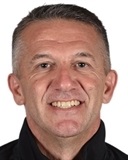
For the first time as an instructor at REFEREE.PL – Sretan Radovic, Euroleague referee from Croatia

We are very pleased to welcome for the first time Sretan Radovic at the REFEREE.PL camp. Sreto is an international active referee from Croatia with an extensive experience on the court. He currently officiates Euroleague and Adriatic league. In the past you could see him on the FIBA and VTB courts and also many international top level tournaments like Olympic Games, World Championships, EuroBasket. Please see a quick talk with Sretan to get to know him little better before the camp and see his expectations and goals as an instructor.

Career highlights:

  • Became a referee in the age of 16 (while being a player)
  • Played until 27 and coached young categories until 33
  • Started active referee career in the age of 27 (1995)
  • 1998. (30) joined 1st CRO division
  • 2001. (33) became FIBA referee
  • 2007. (39) joined Euroleague
  • 2016. in 1st generation passed FRIP program and became FIBA referee’s instructor
  • 5 years FIBA National instructor in Croatia.
  • FIBA tournaments: Olympic Games Rio 2016, World Championship Spain 2014 (semi-finals USA-LTU), 5 Eurobasket (Spain 2007, Poland 09, Lithuania 11 – Final game ESP_FRA, Slovenia 13 and France 15), Man F4, Woman F4, CBA (Chinese finals 2009)
  • Euroleague finals: 2 F4 Istanbul 2010 and Belgrade 2018, 3 Euro Cup finals.
  • VTB(PBL) referee for 10 years: finals and F4.
  • ABA referee, from the first year (2001), many F4, final.
  • In CRO, since 2001 (1st finals), all final games every year.

First time at REFEREE.PL, we celebrate 16 years this time, have you heard about the camp before? What made you come this year?

Sretan: I have heard about your camp first from my friend Mr. Zamojski, then from my colleagues who worked there as instructors and finally from referees attended the camp. Also, I’ve seen some photos and materials from previous camps. I was invited last year but I was already preoccupied so I had to refuse. This year I’m glad I can come from several reasons: your camp is well known in Europe and guarantees good quality; I love to spend time with people from officiating family; I enjoy teaching/working with referees, but also learning from them as well as from other instructors.

2

In your long official career, you went through many leagues, FIBA, VTB which you don’t officiate anymore, and Euroleague and Adriatic league which you continue to officiate. How would you compare the basketball and refereeing in all of them?

Sretan: I started in Croatia as referee and I learned a lot from players, coaches, referees, commissioners, instructors and sometimes spectators and people around basketball (Zadar, Split, Sibenik, Zagreb).
In FIBA I had chance to work with some of the best basketball referees, commissioners and instructors and I grew up as a referee there. I collected experience and knowledge in youth championships (I had from 2 to 5 each summer). This was the stage which took me to big stage – OG, WC, EB.
Finally, as experienced referee, I joined Euroleague. But, don’t think for a second that I didn’t continue to learn and collect experience/knowledge there. On the contrary, although Euroleague is professional and the best league after NBA, I learned a lot here. And I’m still learning. But Euroleague is something special. Different from all other leagues. In Euroleague, you work with the best players and coaches (referees too) and you must perform at the top level. Even today as 51, I’m looking forward to each Euroleague nomination and I enjoy these games a lot!
VTB is excellent competition with great clubs, players, coaches. Great games, great matchups helped me to know players and coaches better, but also to know myself better.
ABA is also excellent competition with very specific games and surroundings that make you stronger (if you manage to survive ? ). I improved a lot there, especially management skills and officiating in tough conditions.
So, if you ask me, Euroleague is Formula 1, but to get the chance to perform there, you need to use every opportunity to practice in strong competitions such as ABA and VTB.

You were nominated to referee EuroBaskets, world championships, many tournaments, which one of them was the most outstanding for you, which one you remember?

Sretan: Of course, I will remember Olympic Games in Rio or World Championship in Spain. For sure Euroleague F4 is something each one of us is dreaming every single season. But for me the “dream tournament” was EuroBasket 2011 in Lithuania. I officiated many excellent games there and the last game, I was one of 3 refs selected for the final game France-Spain! The crowd, NBA stars on the court, game itself and my partners Ilija and Luigi. Perfect 3 weeks and fabulous ending.

You almost worked at FIBA Europe as the referee director, is it true? Would you like to tell us the story and how it turned out?

Sretan: There was a chance in 2015, but luckily, I wasn’t selected. If I was, I should have stopped refereeing and today (without age limit) I would be probably wondering if I’ve chosen the best option. Nothing can be compared with the feeling when you’re on the court!

4

You work as instructor now, how would you like to train your referees? What are the best qualities in referee to achieve and stay at the top level?

Sretan: Thanks to Edo Tartaglia who introduced me into instructor’s business and explained many things to me and Goran Radonjic who was/is excellent teacher I felt in love with teaching referees. I was lucky to work with some of the best teachers during my career and I took from each one of them something which might help me being better referee and instructor. If I mention Lubo, Miguel, Costas, Carl, Alan, Richard, Willy, Danko, Nikos, Todd, Uli, Romas, Juanito, Cema, Alejandro, Ronnie, Terry, Bill, Jerald and many others (they will forgive me, but there were so many great people), you will understand what fortune I was able to get from them. Of course, I tried to create my style, to combine what I’ve learned from them and what I experienced on/off the court. Top referee is combination of many qualities and skills. What works for me is always try to be fair to players, coaches, spectators and colleagues. Don’t do things you didn’t like as a player/coach. Be honest and admit when you made mistake – it’s the only way not to make it again. Work hard and use both good and bad moments to motivate-push yourself even harder. Understand that you can learn from anybody on/off the court and use his example/ideas to improve yourself again and again, because if you’re not improving, you’re going down. Finally, enjoy your games, camps, leagues, tournaments, but don’t forget to enjoy your family, friends and life itself.

3

For the first time as an instructor at REFEREE.PL – Sretan Radovic, Euroleague referee from Croatia

sreto radovicWe are very pleased to welcome for the first time Sretan Radovic at the REFEREE.PL camp. Sreto is an international active referee from Croatia with an extensive experience on the court. He currently officiates Euroleague and Adriatic league. In the past you could see him on the FIBA and VTB courts and also many international top level tournaments like Olympic Games, World Championships, EuroBasket. Please see a quick talk with Sretan to get to know him little better before the camp and see his expectations and goals as an instructor.

Read More

For the first time at the camp – Lars Klaar, instructor from Sweden

Give a warm welcome to Lars Klaar, who for the first time will join instructors team at REFEREE.PL 2019.
Lars started to referee in the age of 15 in 1975 in Sweden and in 1981 he became National referee. In the years between 1985-2009 he officiated top league in his country and international games as FIBA referee in 1990 -2009. Since the league beginning, he joined Euroleague 2000-2009. In his career he officiated EuroBasket Men and Women and F4 Women twice. Lars worked as National Instructor in Sweden since 2011 for 5 years, and from 2012 as FIBA commissioner. In years 2012-2016 he also worked for FIBA as FIBA Europe referee instructor. He is certified FIBA FRIP in 2016, and an Euroleague referee coach since 2009.
Before you meet in September for the camp in Radom, please check the short talk with Lars below. Stay tuned and have a successful camp!

You are one of the referees that helped to build the Euroleague brand, as you started in 2000 in that league, what is special in being a part of this family for nearly 20 years?

Lars: It was special to be a part of something new. For me personally it meant that I took a chance on something nobody new how it would end up. I just had a feeling, that this was something I would regret, if I did not do. Looking back now twenty years later, I am very happy that I made that move. It is a kind of family, and as we are a smaller group of referees and referee coaches it´s easier to communicate and keep us tight as a group. We see each other often, we know each other as referees and coaches and as persons, that is an asset. We always strive to be better as you cannot relax in this kind of competition, where the level of basketball is very high. We need to be on the top of our game every time we step on the court.

ladda nedNow you work as an instructor/coach in Euroleague, tell us more about it.

Lars: We are a group of 15 coaches who work with 71 referees for next season. Some coaches get two or three referees assigned, in order to work a bit more closely together during the season as a developing project. When I am coaching it´s much about play calling, accuracy, mechanics, teamwork, communication and management. I am also interested in watching how a referee handle different kind of pressure.

How did you switch from watching the game as referee and now watching referees?

Lars: That was really the hardest part, especially in EB. When I finished my refereeing career in 2009, I was happy with what I had accomplished as a referee. For sure I had an idea of wanting to be teaching younger referee in Sweden, but that was it. When the letter came from the EB inviting me to be a referee coach in the EB, it was a big surprise and a big challenge, far bigger than to be a referee in EB. But again, if I did not take this opportunity, I would regret it. So how to make the transition? Well, you have to be humble and understand what you can contribute with and what you need to improve as a referee coach and listen and learn from other coaches. Some of the referees that I now would start to coach had far more experience as referees than myself, so you must earn their trust. It took sometime but gradually I felt that I worked myself in. You must listen, ask question and not go about “ball breaking” that leads nowhere. At the same time, you need to get your message across, it´s a balance act, you need to be patient but clear. I have to thank Alan Richardson and Costas Rigas for their trust and giving me that opportunity to start working as a referee coach in EB.

What do you like in Euroleague officiating, is it different than other leagues in some way?

Lars: I cannot speak for any other league, but I do not think that our way of officiating and working is so much different if you look around Europe. NBA and NCAA have their own set of rules and mechanics, but I guess much are similar. EB follow FIBA rules and mechanics, we have some tweaks on the rules and mechanics but not many. EB always try something new. EB implemented 3PO from the first season 2000/2001 and it´s always been about pushing forward. We have an advantage as we are a smaller group, it becomes easier to get everybody on the same page and get the message across. We break downplays a lot, trying to get everything correct. We started to use technology in order to get help on tricky situations, like the IRS. We have a very good video platform that provide us with all game broken down to play by play. We will never be 100 %, but we strive to be as good as we can. We all need to work and improve if we want to stay on top of our game.

How does a match day from a life of instructor looks like?

Lars: I participate in the pregame meeting with the referees, mainly just to listen to how they are going to work in game, any special issues with matchups etc. I will sit in the stands during the game watching and taking notes. After the game we have our postgame where I ask questions and let the crew tell how they feel about the game, teamwork, different play situations, good things and things to improve. I have my part where I tell how I saw the game as a crew performance and on an individual basis. It´s mandatory for me to have a written report ready for each referee and to Director of Referees within 48 hrs. after the game. In that report I will have my conclusion of the game and supplemented with play situations.

Question from Kuba: Is it true that in Sweden you are painting your house every year? ?

Lars: No, it was just for this summer…. And that´s enough…

For the first time at the camp – Lars Klaar, instructor from Sweden

Give a warm welcome to Lars Klaar, who for the first time will join instructors team at REFEREE.PL 2019.
Lars started to referee in the age of 15 in 1975 in Sweden and in 1981 he became National referee. In the years between 1985-2009 he officiated top league in his country and international games as FIBA referee in 1990 -2009. Since the league beginning, he joined Euroleague 2000-2009. In his career he officiated EuroBasket Men and Women and F4 Women twice. Lars worked as National Instructor in Sweden since 2011 for 5 years, and from 2012 as FIBA commissioner. In years 2012-2016 he also worked for FIBA as FIBA Europe referee instructor. He is certified FIBA FRIP in 2016, and an Euroleague referee coach since 2009.
Before you meet in September for the camp in Radom, please check the short talk with Lars below. Stay tuned and have a successful camp!

You are one of the referees that helped to build the Euroleague brand, as you started in 2000 in that league, what is special in being a part of this family for nearly 20 years?

Lars: It was special to be a part of something new. For me personally it meant that I took a chance on something nobody new how it would end up. I just had a feeling, that this was something I would regret, if I did not do. Looking back now twenty years later, I am very happy that I made that move. It is a kind of family, and as we are a smaller group of referees and referee coaches it´s easier to communicate and keep us tight as a group. We see each other often, we know each other as referees and coaches and as persons, that is an asset. We always strive to be better as you cannot relax in this kind of competition, where the level of basketball is very high. We need to be on the top of our game every time we step on the court.

ladda nedNow you work as an instructor/coach in Euroleague, tell us more about it.

Lars: We are a group of 15 coaches who work with 71 referees for next season. Some coaches get two or three referees assigned, in order to work a bit more closely together during the season as a developing project. When I am coaching it´s much about play calling, accuracy, mechanics, teamwork, communication and management. I am also interested in watching how a referee handle different kind of pressure.

How did you switch from watching the game as referee and now watching referees?

Lars: That was really the hardest part, especially in EB. When I finished my refereeing career in 2009, I was happy with what I had accomplished as a referee. For sure I had an idea of wanting to be teaching younger referee in Sweden, but that was it. When the letter came from the EB inviting me to be a referee coach in the EB, it was a big surprise and a big challenge, far bigger than to be a referee in EB. But again, if I did not take this opportunity, I would regret it. So how to make the transition? Well, you have to be humble and understand what you can contribute with and what you need to improve as a referee coach and listen and learn from other coaches. Some of the referees that I now would start to coach had far more experience as referees than myself, so you must earn their trust. It took sometime but gradually I felt that I worked myself in. You must listen, ask question and not go about “ball breaking” that leads nowhere. At the same time, you need to get your message across, it´s a balance act, you need to be patient but clear. I have to thank Alan Richardson and Costas Rigas for their trust and giving me that opportunity to start working as a referee coach in EB.

What do you like in Euroleague officiating, is it different than other leagues in some way?

Lars: I cannot speak for any other league, but I do not think that our way of officiating and working is so much different if you look around Europe. NBA and NCAA have their own set of rules and mechanics, but I guess much are similar. EB follow FIBA rules and mechanics, we have some tweaks on the rules and mechanics but not many. EB always try something new. EB implemented 3PO from the first season 2000/2001 and it´s always been about pushing forward. We have an advantage as we are a smaller group, it becomes easier to get everybody on the same page and get the message across. We break downplays a lot, trying to get everything correct. We started to use technology in order to get help on tricky situations, like the IRS. We have a very good video platform that provide us with all game broken down to play by play. We will never be 100 %, but we strive to be as good as we can. We all need to work and improve if we want to stay on top of our game.

How does a match day from a life of instructor looks like?

Lars: I participate in the pregame meeting with the referees, mainly just to listen to how they are going to work in game, any special issues with matchups etc. I will sit in the stands during the game watching and taking notes. After the game we have our postgame where I ask questions and let the crew tell how they feel about the game, teamwork, different play situations, good things and things to improve. I have my part where I tell how I saw the game as a crew performance and on an individual basis. It´s mandatory for me to have a written report ready for each referee and to Director of Referees within 48 hrs. after the game. In that report I will have my conclusion of the game and supplemented with play situations.

Question from Kuba: Is it true that in Sweden you are painting your house every year? ?

Lars: No, it was just for this summer…. And that´s enough…

For the first time at the camp – Lars Klaar, instructor from Sweden

Give a warm welcome to Lars Klaar, who for the first time will join instructors team at REFEREE.PL 2019.
Lars started to referee in the age of 15 in 1975 in Sweden and in 1981 he became National referee. In the years between 1985-2009 he officiated top league in his country and international games as FIBA referee in 1990 -2009. Since the league beginning, he joined Euroleague 2000-2009. In his career he officiated EuroBasket Men and Women and F4 Women twice. Lars worked as National Instructor in Sweden since 2011 for 5 years, and from 2012 as FIBA commissioner. In years 2012-2016 he also worked for FIBA as FIBA Europe referee instructor. He is certified FIBA FRIP in 2016, and an Euroleague referee coach since 2009.
Before you meet in September for the camp in Radom, please check the short talk with Lars below. Stay tuned and have a successful camp!

You are one of the referees that helped to build the Euroleague brand, as you started in 2000 in that league, what is special in being a part of this family for nearly 20 years?

Lars: It was special to be a part of something new. For me personally it meant that I took a chance on something nobody new how it would end up. I just had a feeling, that this was something I would regret, if I did not do. Looking back now twenty years later, I am very happy that I made that move. It is a kind of family, and as we are a smaller group of referees and referee coaches it´s easier to communicate and keep us tight as a group. We see each other often, we know each other as referees and coaches and as persons, that is an asset. We always strive to be better as you cannot relax in this kind of competition, where the level of basketball is very high. We need to be on the top of our game every time we step on the court.

ladda nedNow you work as an instructor/coach in Euroleague, tell us more about it.

Lars: We are a group of 15 coaches who work with 71 referees for next season. Some coaches get two or three referees assigned, in order to work a bit more closely together during the season as a developing project. When I am coaching it´s much about play calling, accuracy, mechanics, teamwork, communication and management. I am also interested in watching how a referee handle different kind of pressure.

How did you switch from watching the game as referee and now watching referees?

Lars: That was really the hardest part, especially in EB. When I finished my refereeing career in 2009, I was happy with what I had accomplished as a referee. For sure I had an idea of wanting to be teaching younger referee in Sweden, but that was it. When the letter came from the EB inviting me to be a referee coach in the EB, it was a big surprise and a big challenge, far bigger than to be a referee in EB. But again, if I did not take this opportunity, I would regret it. So how to make the transition? Well, you have to be humble and understand what you can contribute with and what you need to improve as a referee coach and listen and learn from other coaches. Some of the referees that I now would start to coach had far more experience as referees than myself, so you must earn their trust. It took sometime but gradually I felt that I worked myself in. You must listen, ask question and not go about “ball breaking” that leads nowhere. At the same time, you need to get your message across, it´s a balance act, you need to be patient but clear. I have to thank Alan Richardson and Costas Rigas for their trust and giving me that opportunity to start working as a referee coach in EB.

What do you like in Euroleague officiating, is it different than other leagues in some way?

Lars: I cannot speak for any other league, but I do not think that our way of officiating and working is so much different if you look around Europe. NBA and NCAA have their own set of rules and mechanics, but I guess much are similar. EB follow FIBA rules and mechanics, we have some tweaks on the rules and mechanics but not many. EB always try something new. EB implemented 3PO from the first season 2000/2001 and it´s always been about pushing forward. We have an advantage as we are a smaller group, it becomes easier to get everybody on the same page and get the message across. We break downplays a lot, trying to get everything correct. We started to use technology in order to get help on tricky situations, like the IRS. We have a very good video platform that provide us with all game broken down to play by play. We will never be 100 %, but we strive to be as good as we can. We all need to work and improve if we want to stay on top of our game.

How does a match day from a life of instructor looks like?

Lars: I participate in the pregame meeting with the referees, mainly just to listen to how they are going to work in game, any special issues with matchups etc. I will sit in the stands during the game watching and taking notes. After the game we have our postgame where I ask questions and let the crew tell how they feel about the game, teamwork, different play situations, good things and things to improve. I have my part where I tell how I saw the game as a crew performance and on an individual basis. It´s mandatory for me to have a written report ready for each referee and to Director of Referees within 48 hrs. after the game. In that report I will have my conclusion of the game and supplemented with play situations.

Question from Kuba: Is it true that in Sweden you are painting your house every year? ?

Lars: No, it was just for this summer…. And that´s enough…

For the first time at the camp – Lars Klaar, instructor from Sweden

Give a warm welcome to Lars Klaar, who for the first time will join instructors team at REFEREE.PL 2019.
Lars started to referee in the age of 15 in 1975 in Sweden and in 1981 he became National referee. In the years between 1985-2009 he officiated top league in his country and international games as FIBA referee in 1990 -2009. Since the league beginning, he joined Euroleague 2000-2009. In his career he officiated EuroBasket Men and Women and F4 Women twice. Lars worked as National Instructor in Sweden since 2011 for 5 years, and from 2012 as FIBA commissioner. In years 2012-2016 he also worked for FIBA as FIBA Europe referee instructor. He is certified FIBA FRIP in 2016, and an Euroleague referee coach since 2009.
Before you meet in September for the camp in Radom, please check the short talk with Lars below. Stay tuned and have a successful camp!

Read More

Special guest at the camp in Radom – Mr Abdullah Al-Ajlan from Saudi Arabia

For the first time at REFEREE.PL in Radom we will host a former top Asian referee, now instructor, Mr Abdullah Al-Ajlan from Saudi Arabia.

Mr Al-Ajlan was born in 1962 and obtained his FIBA license in 1993. In his long career he officiated top level matches in his country, as well as on international level, including multiple finals in the Middle East for more than 25 years. He attended several referee’s clinics and camps. When retired from active refereeing in 2018 he joined FIBA Referee Instructor Program (FRIP). Mr Al-Ajlan currently works as the head of referees in Saudi Arabia, focusing on developing referees in the region he has helped several FIBA referees to become elite referees.
He is now leading a development program, that educates and improves referees in the region.

3

Special guest at the camp in Radom – Mr Abdullah Al-Ajlan from Saudi Arabia

For the first time at REFEREE.PL in Radom we will host a former top Asian referee, now instructor, Mr Abdullah Al-Ajlan from Saudi Arabia.

Mr Al-Ajlan was born in 1962 and obtained his FIBA license in 1993. In his long career he officiated top level matches in his country, as well as on international level, including multiple finals in the Middle East for more than 25 years. He attended several referee’s clinics and camps. When retired from active refereeing in 2018 he joined FIBA Referee Instructor Program (FRIP). Mr Al-Ajlan currently works as the head of referees in Saudi Arabia, focusing on developing referees in the region he has helped several FIBA referees to become elite referees.
He is now leading a development program, that educates and improves referees in the region.

3

Special guest at the camp in Radom – Mr Abdullah Al-Ajlan from Saudi Arabia

For the first time at REFEREE.PL in Radom we will host a former top Asian referee, now instructor, Mr Abdullah Al-Ajlan from Saudi Arabia.

Mr Al-Ajlan was born in 1962 and obtained his FIBA license in 1993. In his long career he officiated top level matches in his country, as well as on international level, including multiple finals in the Middle East for more than 25 years. He attended several referee’s clinics and camps. When retired from active refereeing in 2018 he joined FIBA Referee Instructor Program (FRIP). Mr Al-Ajlan currently works as the head of referees in Saudi Arabia, focusing on developing referees in the region he has helped several FIBA referees to become elite referees.
He is now leading a development program, that educates and improves referees in the region.

3

Sasa Pukl – one of the best active referees in Europe at the camp in Radom

The instructors team this year again will be happy to have Sasa Pukl – who is one of the top active referees in Europe, with extensive background in officiating, and great track record as a referee’s teacher.

This year will be already 8th time that Sasa is joining us at REFEREE.PL, when I asked him about it, he said: “8th time already? The camps I remember the most were the ones when Kuba had also guests from the other side of the ocean. Exchanging ideas about officiating, comparing different “schools” was always interesting for me, also I was learning some new things. Although I am usually very tired after the camp, 4 or 5 days of lecturing, watching a lot of games, giving advices is not the easiest job in the world… But on the other hand, it also gives me energy to start a new season. And my special goal for edition of 2019? To attend at least one morning jogging with campers. I missed all of them since the camp in Tallinn…”

Pukl Sasa 5

Sasa Pukl started to referee in the age of 17. He has passed FIBA Clinic in 1995 in Slovenia. Since then he officiated many European and World Championship, Euroleague Finals and Olympics. We are delighted to have Sasa again with us at the camp, specially that there is a newly (1 year old) organization created within Euroleague that is established with Sasa elected as its president. This is very interesting and good news for the Euroleague newcomers or aspiring referees.

MM1 3465

How was first season of Uebo? What were you able to achieve working with referees and how will you continue your work in next season? As a president are you satisfied from the Union goals, activities and achievements?

Sasa: UEBO (Union of Euroleague basketball officials) is new organization. Euroleague referees have never been organized like this before and I think it is a historical step for us and for all future generations of officials which will come after us. We still have not signed a general contract with Euroleague, but I think we are not far from signing it. Already in last season we had -even without signed agreement – some improvements. The most important one was insurance. In the past we had many cases of referees who got injured in the beginning or in the middle of the season and there was no insurance. Last season fortunately there were no such cases in Euroleague, but if there would be one – referee would get weekly compensation while not being able to officiate.

MM1 4310

You are still working in the court, strongly giving guidance and direction to the Euroleague newcomers with leading by example. How the referee’s life evolved for you over the past 20 years?

Sasa: Well, you need to come to Radom to hear it in my lecture…

Awesome, see you soon in Radom !!!!